

The West Side vs. The Valley – Moving to Los Angeles
- May 9th, 2026
- Author: Ken Sisson
Daphne’s Story
Daphne, a single mother of two school-aged children, is relocating from New York to Southern California for a new job and she couldn’t be more excited. Since losing her husband two years ago, life has been challenging, and raising her kids alone has been even tougher. The move feels like a dream come true.
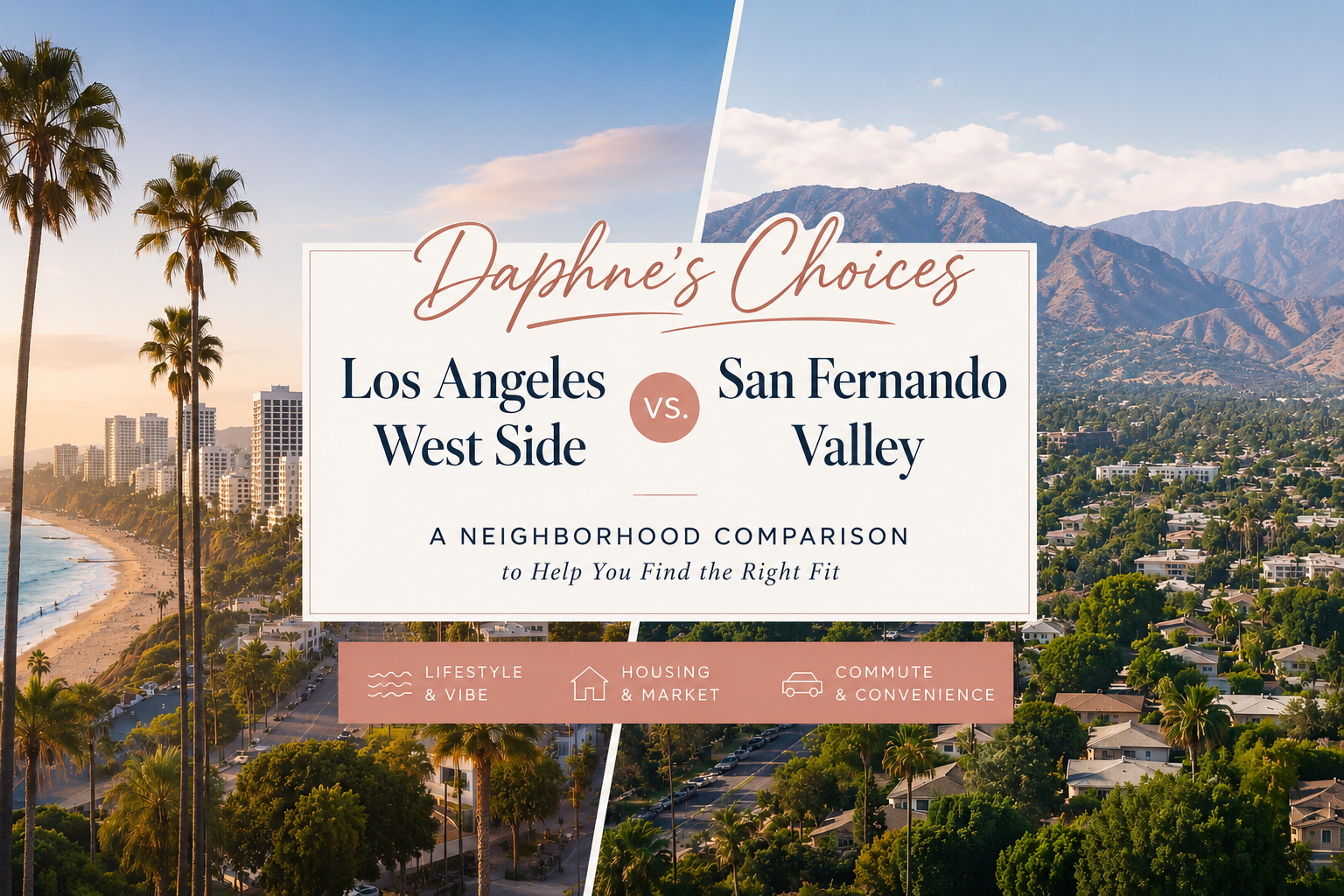
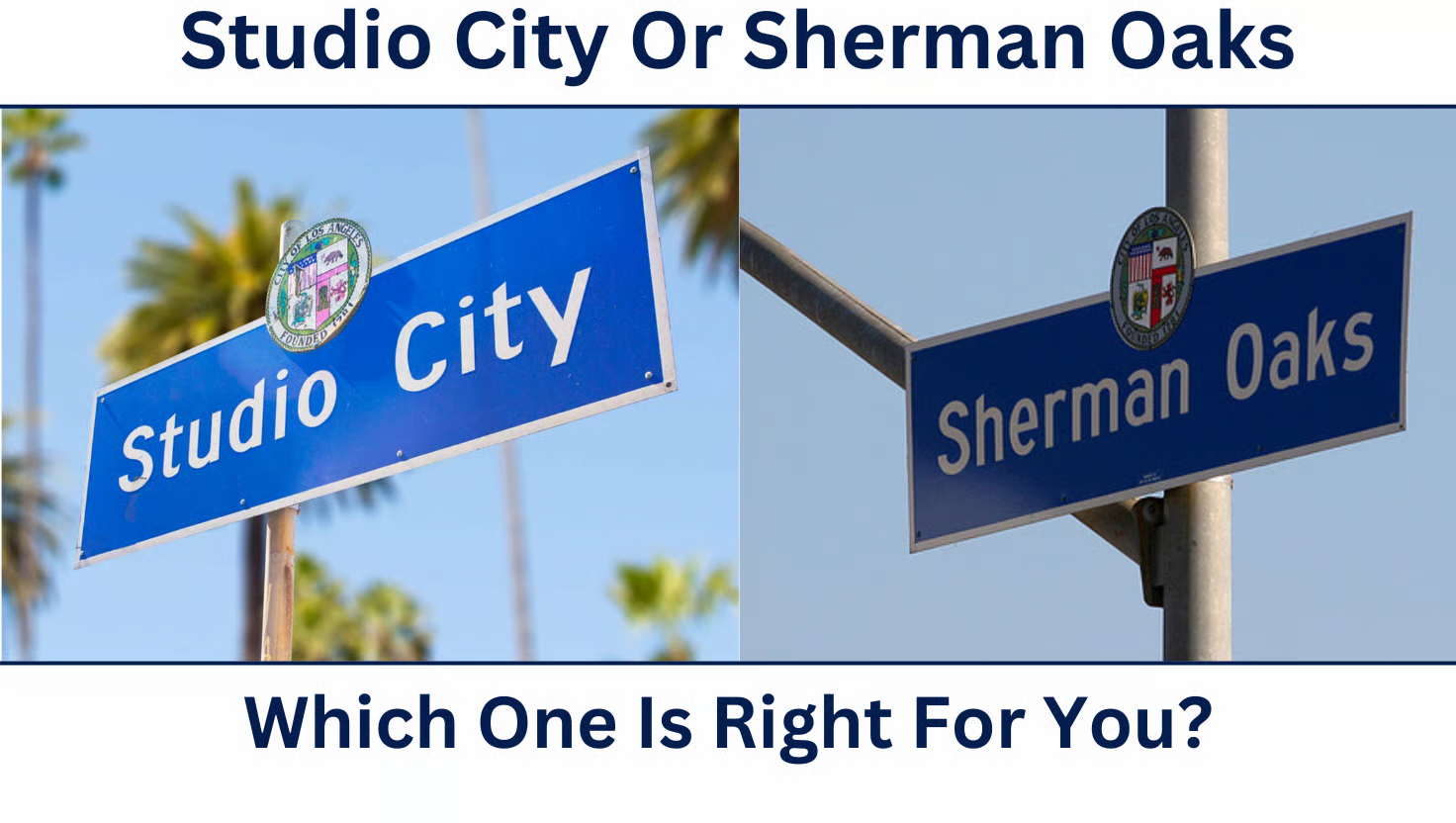
But Los Angeles presents a challenge of its own. Where exactly do you live in a city not only this large, but sprawling? Should she settle on the West Side with neighborhoods like Santa Monica, Venice, Brentwood, Playa Vista, West Hollywood and Culver City? Or should she head “over the hill” into the San Fernando Valley, where neighborhoods like Studio City, Sherman Oaks, Encino, Valley Village, and Burbank offer a very different version of Los Angeles living?
To outsiders, Los Angeles often feels like one giant city. In reality, it is a collection of entirely different lifestyles connected by freeways, canyon roads, and mountain passes. And Daphne has no idea which one will fit her life best.
Finding an expert REALTOR®
Daphne makes an appointment with a REALTOR® in Studio City who specializes in both areas, hoping to get expert advice. She decides that her budget is about $800,000 and hopes to find a condo with enough room for her children or even a small starter home with three bedrooms and two bathrooms. Things like a safe neighborhood, good schools, and reasonable access to work are important,
On the way to his office, Daphne and the kids grab green juices and check out a local yoga studio. It’s July and so hot that Daphne feels like she’s melting. The realtor explains that the West Side tends to have cooler weather while the Valley can be as much as 10 - 20 degrees warmer.
He explains why: The Santa Monica Mountains physically separate the West Side from the San Fernando Valley, and that divide dramatically affects temperature and weather patterns. On the West Side, ocean air helps regulate temperatures year-round. Summer mornings often begin beneath a cool marine layer that slowly burns away by late morning, revealing mild afternoons and cooler evenings.
After years of snow, crowded sidewalks, and freezing winter mornings in New York, part of Daphne finds the sunshine incredibly appealing.
The Biggest Difference: Affordability
Buyers relocating to Los Angeles are often surprised how dramatically purchasing power changes between neighborhoods.
At Daphne’s approximately $800,000 budget, the West Side and the Valley offer very different possibilities, the REALTOR® explains.
On the West Side, $800,000 often means a smaller condo, higher HOA dues, older buildings, less square footage, limited parking, and fewer three-bedroom options. In neighborhoods like Santa Monica or Brentwood, Daphne might find a one bedroom or compact two-bedroom condo, older mid-century buildings, limited storage, and tight parking situations. Buyers often are paying heavily for location, coastal access, walkability, prestige, and employer proximity.
In the valley, the same budget could potentially mean significantly more square footage, a larger condo or townhome, three true bedrooms, updated interiors, attached garages, more parking and storage, and quieter residential streets. In some areas, there may even be entry-level singly family homes available. For a family with children like Daphne’s, the difference could feel substantial.
Many people relocating from cities like New York, Chicago, or San Francisco initially gravitate toward the West Side because of its global reputation and coastal image. But after spending time in Los Angeles, they begin prioritizing space, convenience, school access, parking, storage, backyard space, and more, which often leads them to the Valley.
Public transportation and accessibility
There are many ways to get around, even though Los Angeles remains largely car-dependent. The West Side and the Valley both offer transit options.
According to the Los Angeles County Metropolitan Transportation Authority (Metro), bus transportation and rail lines provide viable alternatives for some commuters, though most residents still rely on driving. But Daphne is excited to drive her car after taking public transit in New York, so it’s a non-issue for her.
Still, Los Angeles public transportation has been evolving rapidly in recent years. In fact, this very weekend (May 2026) marks a major milestone for the city with the opening of three new underground Metro D Line subway stations along Wilshire Boulevard at Wilshire/La Brea, Wilshire/Fairfax, and Wilshire/La Cienega. The expansion significantly improves rail access between Downtown Los Angeles, Koreatown, Mid-Wilshire, Miracle Mile, and the edge of Beverly Hills.
Additional Metro expansions are already underway or planned throughout Los Angeles County, including future D Line extensions toward Century City, UCLA, and Westwood, along with continued improvements to Valley, West Side, and regional transit connectivity ahead of major international events like the 2028 Olympics.
For someone relocating from New York, Los Angeles still will not feel comparable to Manhattan’s dense subway system or around-the-clock transit culture. However, these expansions represent a meaningful shift for Los Angeles. Areas once considered extremely difficult to navigate without a car are becoming increasingly connected, reducing commute times and improving accessibility between major employment centers, entertainment districts, museums, shopping areas, and residential neighborhoods across both the West Side and parts of the Valley.
The emotional difference between the two areas
Choosing between the West Side and the Valley is not just a financial decision – it’s also an emotional and lifestyle dilemma.
The West Side lifestyle tends to feel more coastal, energetic, image-conscious, walkable in select areas, and internationally recognized. There is a constant connection to beach culture, fitness and wellness, outdoor cafes, creative industries, tech companies, entertainment executives, boutique shopping, and luxury branding. It reminds Daphne a bit of Manhattan, except with palm trees and ocean breezes.
The Valley, meanwhile, often feels more residential, spacious, family-oriented, relaxed, and less compressed. Many streets are quieter, homes often sit on larger lots, and daily life can feel less hurried. It also has deep ties to the entertainment industry with major studios nearby including Universal Studies Hollywood, Warner Bros. Discovery, and The Walt Disney Company.
For lifestyle, the Valley also provides easier access to hiking trails, parks, sports facilities, and larger grocery stores and retail centers. And despite its suburban feel, many Valley neighborhoods remain highly central to the rest of Los Angeles.
Luxury exists in both areas – but Ultra-Luxury is different
As they continue touring neighborhoods, Daphne is fascinated by some of the spectacular homes perched high above the city. The realtor describes an important distinction.
Both the Valley and the West Side contain luxury real estate markets. Luxury homes absolutely exist in Studio City, Sherman Oaks, Encino, Calabasas, and Hidden Hills, but Los Angeles’ most globally recognized ultra-luxury enclaves remain concentrated primarily on the West Side and adjacent hillside communities.
Areas such as Beverly Hills, Bel Air, Holmby Hills, Brentwood Park, Malibu, Pacific Palisades, and the Bird Streets above the Sunset Strip represent some of the most prestigious residential real estate in the world. These famous streets (e.g., Blue Jay Way, Oriole Drive, Nightingale Drive) have become internationally known for architectural estates, celebrity ownership, panoramic city views, ultra-modern design, and record-breaking sales.
So…where should Daphne choose?
For Daphne, the decision comes down to priorities. She loves the West Side – the beaches, coastal weather, energy, and lifestyle. But she also realizes that in this stage of her life, she values space, stability, practicality, family convenience, and financial breathing room. The possibility of having more room for her children and a less stressful daily routine feels like the right fit for this chapter of her life.
Once the kids are grown, she may decide a move to the West Side is for her…she’s not ruling that out!
How Can I Help?
After helping buyers relocate throughout Los Angeles for over 25 years — and personally living on both the West Side and in the San Fernando Valley — I’ve found there is no universally “better” area. The right choice depends on commute patterns, lifestyle priorities, budget, climate preferences, and long-term goals. I have helped many people like Daphne and specialize in helping both locals and relocation clients buying and selling properties across the Valley and West Side. As a Studio City Real Estate Agent and local expert, I can help find you the perfect property. Contact me at (310) 308-8672.

About Ken Sisson
Ken Sisson is a Los Angeles real estate broker with more than 25 years of experience helping buyers, sellers, and relocation clients navigate the West Side, San Fernando Valley, Hollywood Hills, and surrounding Los Angeles neighborhoods. Before real estate, Ken served as a vice president at a Fortune 500 financial institution, bringing a strategic and analytical approach to pricing, negotiations, and real estate advisory services.
Known for his no-pressure style, deep local knowledge, and mortgage background, Ken works with both buyers and sellers to maintain a real-time understanding of Los Angeles market trends, buyer psychology, and negotiation dynamics.
Sources and Additional Resources:
- Los Angeles Times – Mapping L.A. Neighborhoods
- The Real Deal – West LA Real Estate Coverage
- Nextdoor – the Bird Streets of Los Angeles
- Los Angeles County Metropolitan Transportation Authority (Metro)
- Ken Sisson Real Estate – The Los Angeles Luxury Real Estate Market Now
- The Guardian – Riding the D in Los Angeles
- The New Yorker – Is Los Angeles Finally Ready to Take the Subway?




 The MLS™ Combined LA/Westside MLS® (CLAW): All information deemed reliable but not guaranteed. All properties are subject to prior sale, change or withdrawal. Neither listing broker(s) or information provider(s) shall be responsible for any typographical errors, misinformation, misprints and shall be held totally harmless. Listing(s) information is provided for consumer's personal, non-commercial use and may not be used for any purpose other than to identify prospective properties consumers

