

How Most People Find a Real Estate Agent in 2026 — And What They Don’t Realize

- Date: May 7th, 2026
- Author: Ken Sisson
For most homebuyers and sellers today, the search for a real estate agent begins online.
People search phrases like:
• “best REALTOR® near me”
• “top listing agent in Los Angeles”
• “best real estate agent for first-time buyers”
• “who should I use to sell my home”
Then they click on:
• Zillow,
• Realtor.com,
• Google search results,
• social media recommendations,
• lender websites,
• AI-generated summaries,
• “preferred professionals” programs,
• or “trusted agent” networks.
Simple enough, right?
But what many consumers don’t realize is that the modern real estate search process has quietly evolved into something far more sophisticated — and far more monetized — than most people understand.
Increasingly, consumers are not simply shopping for a real estate professional.
They are entering a lead-generation ecosystem where consumer attention, consumer intent, and eventually the real estate transaction itself have become valuable monetized assets.
In many cases, the consumer is no longer just the customer.
The consumer has become the product.
The Rise of the Monetized Real Estate Referral Ecosystem
Over the past decade, major technology platforms and referral networks have spent enormous amounts of money dominating online real estate traffic.
These companies compete aggressively for:
• Google search visibility,
• YouTube advertising,
• social media traffic,
• AI-generated recommendations,
• mortgage leads,
• home-search traffic,
•and “find an agent” inquiries.
Consumers naturally assume these systems exist primarily to connect them with the best local professional for their needs.
And sometimes they absolutely do connect consumers with excellent agents.
But consumers should also understand that many of these systems operate highly sophisticated monetization models behind the scenes.
In many modern referral ecosystems, participating agents or brokerages may pay:
• monthly advertising costs,
• lead acquisition fees,
• referral fees,
• performance-based fees,
• or a percentage of their commission when a transaction closes.
Some of these referral models can involve 35% to 40% or more of the gross commission earned by the brokerage on a successfully closed transaction.
That’s not speculation.
That’s the business model.
What “Preferred Agent” Really Means
Terms like:
• “preferred agent,”
• “trusted professional,”
• “recommended partner,”
• and “top agent”
can create the impression that professionals are being selected primarily because of consumer outcomes, service quality, ethics, negotiation ability, or local expertise.
And certainly, many highly qualified agents do participate in these programs.
But consumers should understand that visibility and placement inside many of these systems are often heavily influenced by:
• advertising relationships,
• referral agreements,
• lead-purchase systems,
• performance-based monetization models,
• or platform economics.
In other words:
visibility should not automatically be confused with merit.
That distinction matters.
A lot.
Consumers Think They’re Choosing an Agent. Often, They’re Entering a Revenue Funnel.
Most consumers believe the process works like this:
1. Search online
2. Find the best local expert
3. Receive objective guidance
4. Successfully complete the transaction
But in many cases, the actual process looks more like this:
1. Consumer intent is captured
2. Consumer information becomes lead inventory
3. The lead is routed through a monetized ecosystem
4. Referral economics become attached
5. Ancillary services may be introduced
6. Revenue is generated if the transaction closes
That’s a very different framework.
And most consumers never see it happening.
The Consumer Isn’t Just the Customer Anymore
In many industries today, consumer attention itself has become the product being monetized.
Residential real estate is no exception.
When someone clicks:
• “Connect with an Agent”
• “Schedule a Tour”
• “Talk to a Home Expert”
• “Find a Trusted REALTOR®”
there may be a sophisticated financial ecosystem operating behind the scenes.
Some platforms earn revenue through:
• advertising,
• lead subscriptions,
• affiliated service relationships,
• referral agreements,
• or performance-based fee structures tied directly to successfully closed transactions.
Public company filings increasingly reveal just how sophisticated these monetization systems have become.
In Zillow’s 2025 Annual Report, (bottom of page 73) - the company described aspects of its “Zillow Preferred” model as a “pay for performance pricing model” in which participating agents pay performance advertising fees when transactions close from leads generated through Zillow’s platform.
Translated into plain English:
the consumer inquiry itself becomes part of a monetized transaction funnel.
The lead becomes inventory.
The closing becomes the monetization event.
Zillow Flex and Performance-Based Referral Models
Some major platforms now openly describe performance-based referral and lead monetization structures in public filings and agent-facing materials.
For example, Zillow’s Flex and Zillow Preferred programs outline referral and performance-based fee structures tied directly to successfully closed transactions.
Agent-facing pricing materials outline fee structures that may vary based on market and transaction size, with some categories reaching as high as 40% in certain pricing tiers.
Los Angeles is categorized within Zillow’s highest pricing group structure.
Importantly, this article is not suggesting that these companies are doing anything illegal. Nor does participation in these systems automatically mean a consumer will receive poor service.
Many excellent agents participate in these programs.
But consumers deserve transparency regarding how these recommendation systems operate and how the economics behind them may influence the broader transaction environment.
Fact of the matter is, even though much of this remains undisclosed, it's hiding in plain sight.
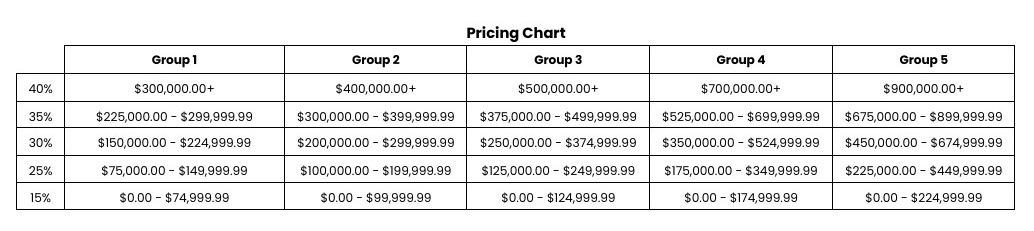
Pictured above is the Zillow "Preferred Agent" Referral Fee Pricing Chart. Simply labeled "pricing chart". Downloaded it here.
The groups refer to the list of states and local markets within those states and the fee percentages are broken down by group number and price-point. The highest price points carry the heftiest referral fees.
The Real Estate Lawsuit Changed Compensation Rules — But Not Consumer Acquisition Economics
The Burnett v. National Association of REALTORS® lawsuit and subsequent settlement dramatically changed portions of the residential real estate industry.
The industry saw:
• new disclosure requirements,
• changes involving buyer representation agreements,
• increased public scrutiny surrounding commissions,
• and changes to certain compensation practices.
But one thing largely remained untouched:
the economics of consumer acquisition.
Technology platforms, referral networks, lead-generation companies, lender ecosystems, and portal advertising systems still spend enormous sums competing for consumer attention online.
That cost enters the transaction ecosystem somewhere.
While consumers may not directly write a separate check labeled “referral fee,” the economics surrounding customer acquisition and platform monetization inevitably influence the broader transaction environment.
That can potentially affect:
• negotiation flexibility,
• credits,
• marketing budgets,
• staffing,
• operational pressure,
• and ancillary service relationships connected to the transaction.
The Rise of the “Captive Consumer” Model
Today, many consumers unknowingly enter vertically integrated ecosystems where multiple services become connected to a single online inquiry.
One click may eventually route consumers toward:
• a mortgage lender,
• a real estate brokerage,
• title services,
• escrow services,
• insurance providers,
• moving services,
• or affiliated vendors.
Convenience can absolutely be valuable.
But convenience and transparency are not always the same thing. Whoever controls the consumer wins the proverbial game.
Consumers should understand when recommendations are being made because they are genuinely believed to be the best option — versus when platform economics, referral structures, or affiliated business relationships may also play a role. With these platforms, it's always the latter.
The primary obligation of large public companies is ultimately to their shareholders and business models.
That does not automatically mean consumers are receiving poor service.
But it does mean consumers should ask better questions. Buyer beware.
Search Engines Aren’t the Problem — Blind Reliance Is
One important distinction consumers should understand is that search engines like Google and Bing are not themselves charging real estate referral fees simply because someone searches online for a REALTOR® or local real estate agent.
In fact, consumers can absolutely use search engines very effectively to independently research and vet real estate professionals without necessarily entering a monetized referral funnel.
That distinction matters.
The issue is not that consumers are searching online.
The issue is that many consumers unknowingly move from independent research into highly monetized lead-routing ecosystems without fully understanding how those systems work.
Consumers can still use:
• Google,
• Bing,
• YouTube,
• AI search tools,
• review platforms,
• social media
• and even Homes.com
to independently evaluate agents and conduct a thoughtful interview process.
And in many cases, that may actually lead to a more informed and transparent decision. While Google is testing IDX search, and could arguably obliterate the real estate search platforms, all of the above operate on a pay-per-click model that's free of massive referral fees. Additionally, you'll typically see advertising labeled as such or as "sponsored results".
A Different Approach: The Rise of Homes.com
One platform taking a somewhat different approach in recent years is Homes.com.
Unlike some lead-generation platforms and referral networks that rely heavily on referral fees paid by agents after a transaction closes, Homes.com has focused more on becoming a consumer home search platform and collaboration tool between agents and clients.
The company has invested heavily into upgrading its technology, search experience, mapping tools, listing presentation, market data, and overall consumer experience. While Homes.com does offer advertising opportunities and “partner agent” relationships, its platform positioning has increasingly centered around helping consumers search for homes while working directly with an agent of their choosing.
For buyers and sellers, this distinction matters.
Instead of steering consumers primarily through a referral-based matchmaking system, platforms like Homes.com are leaning more toward empowering consumers with property search tools, market information, neighborhood insights, and collaborative features that can enhance communication between clients and their real estate agent.
In many ways, the platform is evolving into less of an “agent finder” and more of a real estate search and collaboration ecosystem.
That shift could become increasingly important as consumers demand greater transparency, more direct relationships with agents, and better technology throughout the home buying and selling process.
How Consumers Can Use the Internet to Better Find a Better REALTOR®
The internet itself is not the problem.
Used correctly, it can be one of the most powerful tools available to consumers when selecting a real estate professional.
Rather than relying solely on “recommended” or “preferred” agent programs, consumers should consider conducting a more independent vetting and interview process.
Some smart ways to evaluate a REALTOR® include:
• Reading Google reviews carefully
• Comparing reviews across multiple platforms
• Reviewing the agent’s actual website
• Watching long-form video content if available
• Looking for genuine local market expertise
• Evaluating whether the agent creates educational content
• Reviewing years of experience and licensing status
• Asking how the agent generates business
• Interviewing multiple agents directly
• Asking detailed strategy and negotiation questions
YOU CAN EVEN USE A.I. TO HELP YOU WITH ALL OF THE ABOVE!
Consumers often confuse convenience with due diligence.
But choosing a REALTOR® is not simply choosing a salesperson.
It’s choosing an advisor for one of the largest financial decisions most people will ever make.
If you’d like additional guidance on how to properly evaluate and interview a real estate professional, you can also read my related article:
AI Recommendations Are About to Make This Even More Important
As AI-driven search tools and recommendation engines increasingly shape how consumers choose professionals, understanding how visibility is created becomes even more important.
Consumers are beginning to rely on:
• Google AI Overviews,
• ChatGPT,
• Gemini,
• algorithmic recommendation systems,
• and AI-generated summaries
to identify real estate professionals.
But algorithms are not necessarily neutral.
Visibility can be influenced by:
• advertising,
• authority signals,
• engagement metrics,
• monetization systems,
• platform relationships,
• and customer acquisition strategies.
Consumers should not automatically assume the first recommendation is necessarily the best recommendation.
A.I. should never be taken as absolute fact or trusted completely. It is best used for processing search results and information. As I mentioned in the prior section of this article, it can help process the information and outline the review, interview and agent selection process for you. That's HUGE!
Ask Better Questions
Technology has absolutely improved many parts of the real estate process.
Consumers have more access to information and more tools available than ever before.
That’s a good thing.
But consumers also deserve transparency regarding:
• how professionals are recommended,
• how referral systems work,
• how visibility is created,
• and how monetization structures may influence the transaction environment behind the scenes.
Because at the end of the day, buying or selling a home is one of the largest financial decisions most people will ever make.
Consumers deserve to know when they are truly choosing a professional — and when they may actually be entering a monetized ecosystem designed primarily to generate revenue from their transaction.
As both a licensed California real estate broker and someone with a background in mortgage financing and underwriting, I believe informed consumers make better decisions.
And better decisions usually lead to better outcomes.
Frequently Asked Questions
Do Zillow agents pay referral fees?
Some Zillow programs involve performance-based referral or advertising fee structures tied to successfully closed transactions. Publicly available agent-facing materials outline varying fee structures depending on market and transaction value.
What is Zillow Flex or Zillow Preferred?
Zillow Flex and Zillow Preferred are performance-based lead programs in which participating agents or brokerages may pay fees tied to successfully closed transactions generated through Zillow’s platform.
Does Google charge real estate referral fees?
Google itself is not a real estate referral network and does not charge referral fees simply because consumers search for REALTORS® or real estate agents online. Consumers can independently research and vet agents through search engines and public review platforms.
Are “preferred agents” necessarily the best agents?
Not necessarily. Many excellent agents participate in preferred-agent programs, but consumers should understand that visibility and placement within these systems are often influenced by advertising participation, referral agreements, or lead-purchase relationships.
How should I choose a real estate agent?
Consumers should interview multiple agents, review independent reviews, evaluate local expertise, ask about experience, and understand how the professional receives business and referrals.
Are referral fees disclosed to consumers?
In many cases, referral fee arrangements between licensed brokerage entities are not directly disclosed on consumer closing statements, even though they may influence the broader economics of the transaction. This can vary state by state. California Association of REALTORS does have a form to disclose a referral fee. It's not always utilized.

About Ken Sisson
Ken Sisson is a Los Angeles real estate broker with more than 25 years of experience helping buyers, sellers, and relocation clients navigate the West Side, San Fernando Valley, Hollywood Hills, and surrounding Los Angeles neighborhoods. Before real estate, Ken served as a vice president at a Fortune 500 financial institution, bringing a strategic and analytical approach to pricing, negotiations, and real estate advisory services.
Known for his no-pressure style, deep local knowledge, and mortgage background, Ken works with both buyers and sellers to maintain a real-time understanding of Los Angeles market trends, buyer psychology, and negotiation dynamics.
Sources & Additional Reading
Zillow Flex / Zillow Preferred Pricing Materials
RamseyTrusted Real Estate Program
Additional Analysis Regarding Ramsey Referral Programs
Consumer Financial Protection Bureau (CFPB) resources regarding RESPA
National Association of REALTORS® Digital Consumer Trends Reports


 The MLS™ Combined LA/Westside MLS® (CLAW): All information deemed reliable but not guaranteed. All properties are subject to prior sale, change or withdrawal. Neither listing broker(s) or information provider(s) shall be responsible for any typographical errors, misinformation, misprints and shall be held totally harmless. Listing(s) information is provided for consumer's personal, non-commercial use and may not be used for any purpose other than to identify prospective properties consumers

